
Dear subscriber,
This week reflects a maturing Indonesian tech and consumer ecosystem, where profitability, exits, and global ambition are all happening at once. From Fore Coffee proving that a local F&B model can scale sustainably, to Waresix’s strong public market debut signaling investor confidence in logistics, and Rosé All Day exploring strategic options amid beauty sector consolidation, the market is showing clearer paths from growth to value realization. At the same time, expansion stories from Tiket.com and Kopi Kenangan highlight a new phase where Indonesian brands are not just leaders at home but are increasingly stepping onto the regional stage with confidence.
Thanks for reading RISE by DailySocial! Subscribe for free to receive new posts and support my work.
Indonesia’s B2B tech moment is here.
On July 1–2 at AXA Tower, Jakarta, B2B Tech Asia Expo 2026 brings together the region’s top enterprises, vendors, and innovators at Southeast Asia’s largest expo dedicated exclusively to B2B software. With exhibitors including AWS, Salesforce, Mekari, and SoftBank, it’s the definitive platform for discovering solutions and forging partnerships as Indonesia’s digital economy accelerates. Register now at b2btechasia.com.

Stay ahead,
DailySocial Team
🚨 What’s New
Fore Coffee Proves the Model Works Indonesian homegrown coffee chain Fore Coffee posted a standout full-year 2025: net profit surged 55% year-on-year to IDR 90.1 billion, while revenue climbed 44% to IDR 1.5 trillion. The company added over 90 new stores throughout the year, bringing its total network to 316 locations across Indonesia. With an EBITDA margin expanding to 20% and IPO proceeds deployed with discipline, Fore is showing that the grab-and-go coffee model built for the everyday Indonesian commuter, is not just scaling, it’s maturing into a profitable, investor-grade business.

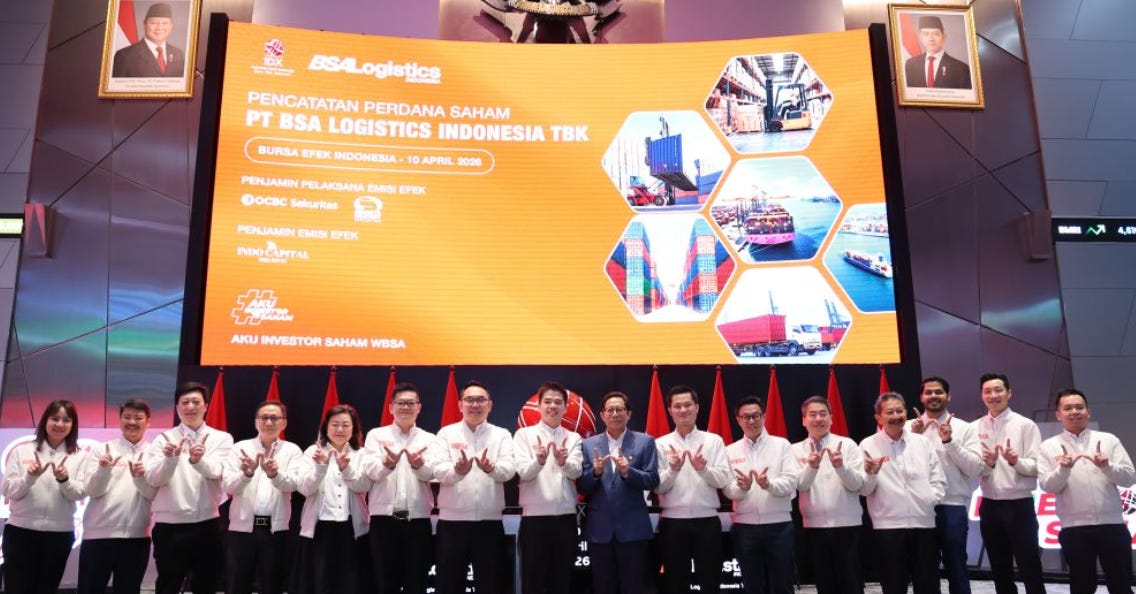
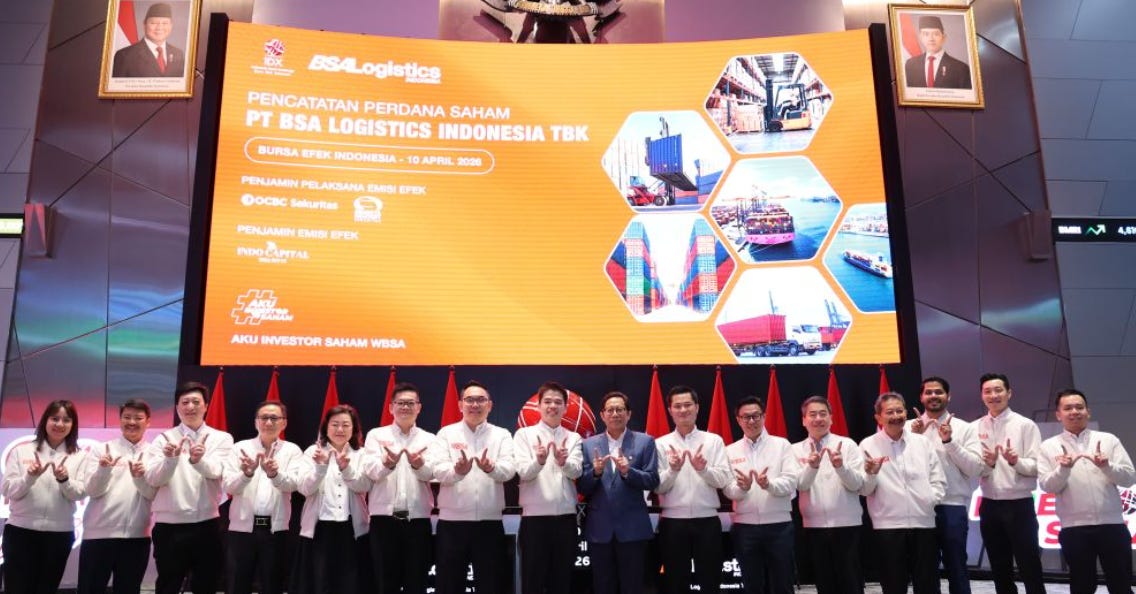
Waresix Unit Makes a Strong IDX Debut BSA Logistics Indonesia, a subsidiary of Tiger Global-backed Waresix, opened 34% above its IPO price on its Indonesia Stock Exchange debut, triggering an automatic trading halt within hours. The listing raised IDR 302.4 billion and was oversubscribed nearly 387 times, valued at almost Rp2 trillion (around $114 million) market cap, signaling robust appetite from local investors for logistics infrastructure plays. With a stated vision of building an end-to-end logistics platform spanning trucking, warehousing, freight, and shipping across the archipelago, this debut signals that deep-tech logistics is a category investors are ready to bet on in a country where supply chain gaps remain a real economic constraint.
Rosé All Day: A Beauty Brand Weighing Its Next Chapter Rosé All Day Cosmetics, one of Indonesia’s most recognized homegrown beauty brands, is reportedly exploring strategic sale options, about two years after closing a $5.41 million Series A backed by AC Ventures. This comes amid an accelerating consolidation wave in the domestic beauty industry, where proven brand equity combined with strong digital sales channels are attracting serious acquirer interest. For an ecosystem where beauty is the largest FMCG e-commerce category, the potential transaction would be a meaningful signal of how local consumer brands can build, scale, and find credible exits.
SwipeRx and Pharmacy Tech Continue to Quietly Win Southeast Asia’s largest digital pharmacy network SwipeRx continues to deepen its footprint in Indonesia, partnering with Inofarma to establish 1,000 pharmacies nationwide and publishing a new position paper calling for pharmacists to be recognized as frontline healthcare partners. With only 30,000 pharmacies serving 275 million Indonesians, against a needed 90,000 the gap is enormous. SwipeRx’s combination of tech, bulk purchasing, and digital education for 300,000+ pharmacy professionals shows how infrastructure-first startups can quietly build category-defining businesses in underserved healthcare markets.
Unilever Indonesia Eyes Buavita Divestiture Unilever Indonesia is reportedly weighing a sale of its Buavita juice business, with UBS said to have been appointed as advisor, running the process separately from its earlier SariWangi tea divestiture given the different product category and buyer profiles. The move is part of Unilever’s broader global portfolio rationalization, which already saw it spin off ice cream, sell several food brands, and divest its Indonesia tea business earlier this year. For local FMCG players and strategic investors, this creates a rare opportunity to acquire a branded, shelf-proven consumer goods asset with decades of distribution depth across the country.

👏 What’s Exciting
Two Homegrown Brands Go Global — Together In a neat double move, Tiket.com and Kopi Kenangan both expanded internationally in the same week. Tiket.com, the online travel platform under Blibli, launched a new entity in Japan, extending its regional office network to include one of Asia’s most mature travel markets. Meanwhile, Kopi Kenangan opened its Taiwan debut. The parallel moves by two very different consumer businesses reflect a shared conviction: that Indonesian brands, built on deep local product-market fit, are ready to compete and grow in markets beyond their home turf.
Danantara Makes Its Asset Management Play Indonesia’s sovereign wealth fund Danantara signed agreements to acquire controlling stakes in four state-owned asset managers, BRI MI, MMI, BNI AM, and PNM IM, in deals totaling IDR 2.7 trillion ($159 million). All agreements were signed on April 1, 2026 and filed with the IDX. The move consolidates fragmented, bank-affiliated investment management units under a single state entity, with CIO Pandu Sjahrir framing it as a step toward building a larger, more competitive asset manager capable of regional scale. For Indonesia’s capital markets, the consolidation is worth watching: a leaner, unified state asset manager could direct more patient capital toward long-term domestic investment priorities.
Indonesia Puts Platforms on Notice — and Means It The Ministry of Communication and Digital (Komdigi) issued Ministerial Decree No. 127 of 2026, requiring digital platforms hosting user-generated content to take down disinformation and hate speech within a maximum of four hours of receiving an official order. The regulation came alongside Komdigi summoning Google and Meta over non-compliance with PP Tunas, Indonesia’s child protection law for digital platforms, with Meta eventually complying and Google receiving a formal written warning. The developments signal that Indonesia is moving from reactive enforcement to proactive digital governance, and that platforms operating here need to treat local regulatory obligations as real infrastructure costs, not optional compliance checkboxes.
🚀 What’s Next: AI Shopping Goes Mainstream in Asia Pacific as Trust Becomes the Next Frontier
Visa’s latest Asia Pacific consumer survey highlights how AI is rapidly becoming embedded in the shopping journey. Today, 74% of consumers in the region already use AI-powered tools to discover, research, or compare products, signaling a clear shift toward more intelligent and assisted commerce experiences. AI is no longer experimental but is becoming a default layer in how people browse and make decisions online.
The data also reveals a nuanced gap between adoption and trust. While usage is high, 26% of consumers remain unsure whether AI recommendations truly align with their best interests, and around 32% are hesitant to share payment or personal data with AI systems. At the same time, 45% say they would be more willing to use AI in transactions if stronger security assurances are in place. This shows that transparency, control, and secure payment infrastructure are critical to unlocking the next phase of AI commerce.
For Indonesia, this presents a clear opportunity. As one of the most mobile-first and socially driven e-commerce markets in the region, Indonesia is well positioned to accelerate AI-led commerce adoption, particularly in discovery, personalization, and conversational shopping. The key unlock will be building consumer trust through clear data practices and seamless payment security, enabling local platforms and brands to move from AI-assisted browsing to fully integrated AI-powered transactions at scale.