
Dear subscriber,
Hi everyone, hope this finds you well. This week, capital is clearly on the move, with the IDX gearing up for a busy run of IPOs and fresh deals flowing into coffee, healthcare and consumer finance. On the policy side, OJK is setting clearer rules for finfluencers while Jakarta drafts AI into its biggest national programs and Grab and GoTo give drivers a more generous split. There is plenty for builders to feel good about too, from MSCI keeping Indonesia in its Emerging Markets bucket to Google Cloud, Microsoft and Tencent Cloud doubling down on the local market. We wrap with S&P's read on why AI is becoming Asia's new growth engine, and where Indonesia fits in. Let's dive in.

Hostinger isn’t just hosting anymore. We unpacked how Horizons and OpenClaw are turning the hosting incumbent into a credible AI powerhouse — EUR275M (~IDR5,5T) in 2025 revenue, four straight years of 50%+ growth, and a thesis that AI doesn’t replace hosting, it sits on top of it. For founders building today, that means the gap between idea and shipped product collapsing from weeks to hours. Read the full story here.
Thanks for reading RISE by DailySocial!
Stay ahead,
DailySocial Team
🚨 What’s New
Harlan + Holden pours $12M into a regional café play Southeast Asia’s premium coffee race just got a fresh shot of capital. Harlan + Holden, which began life as a timeless-lifestyle apparel label, is sealing a $12 million round to scale its outlet count across the region. The timing tracks a segment that keeps heating up, with Fore Coffee posting 60% profit growth in a seasonally soft first quarter and Pickup Coffee issuing up to $8 million in convertible notes ahead of its own raise. For Indonesia, where homegrown chains have turned a daily caffeine habit into a venture-scale category, a cross-border brand betting that loyalty travels from closet to cup is a vote of confidence in the market’s appetite. The premium space is crowded and outlet expansion is capital-intensive, but momentum is clearly on the side of the builders.

Grab and GoTo trim driver commissions to 8% Indonesia’s gig economy is getting a more generous split. From July 1, Grab and GoTo will cut motorbike ride commissions to 8% from the previous 20%, letting drivers keep 92% of every fare under Presidential Regulation No. 27/2026. The move follows President Prabowo’s May 1 call to lift the revenue share, and it arrives bundled with new accident and healthcare protections for the country’s 4 million-plus drivers. Lower take rates do squeeze platform economics, yet both companies are leaning on scale, volume growth and AI-led efficiency to defend their margins. A healthier, better-covered driver base is exactly the kind of foundation that keeps Indonesia the region’s most important mobility market.
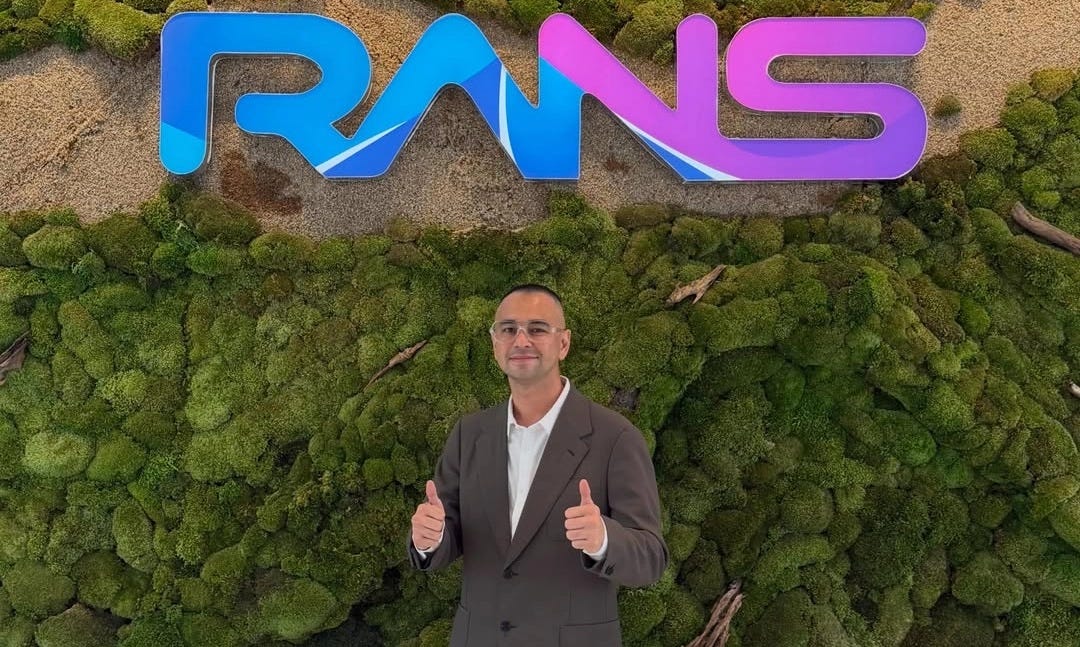
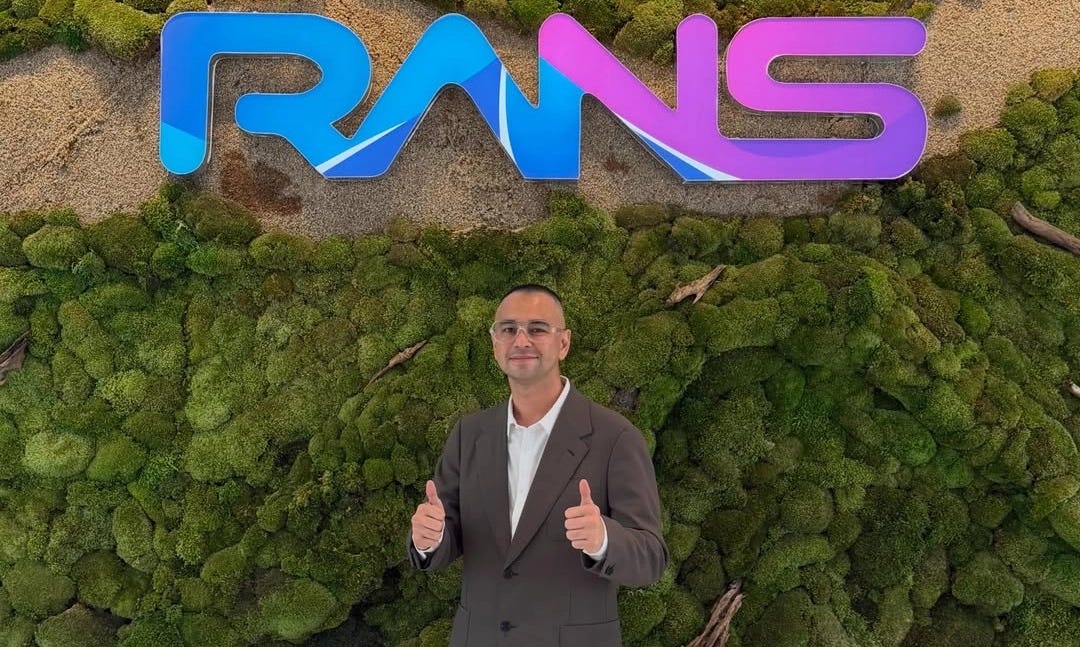
Indonesia’s IPO window swings open for a July rush The IDX is heading into July with a notably busy listing calendar. Celebrity-founded RANS Entertainment is seeking up to $24 million for a July 10 debut under the ticker RANS, with proceeds earmarked for concerts, an AI venture and the Cipungland theme park. Healthcare is the standout theme, as eyecare network JEC lines up a $38 million raise (ticker JECX, July 7) alongside medical-equipment distributor Esa Medika at $15 million (EMMI, July 8) and diagnostics player Prodia Diagnostic Line, all trading within days of one another. On the global stage, Merdeka Gold raised $304 million in Hong Kong, becoming the first Indonesian issuer to pull off a dual listing on HKEX in over two decades, with the institutional tranche covered 7.67 times. Telecom-infrastructure and power-solutions group Bach Multi Global rounds out the queue after posting 2025 net revenue of Rp 1.73 trillion, up nearly 40% year on year. Even with the broader pipeline thinning, the breadth here, from consumer to healthcare to gold, signals real depth in Indonesia’s capital markets.
IFC weighs a $100M boost for Summit Oto Finance Development capital is flowing toward Indonesia’s consumer-finance engine. The IFC is considering a senior unsecured loan of up to $100 million to PT Summit Oto Finance, the SMBC-controlled multifinance company, on a three-year tenor. Backing from a World Bank arm is a strong signal of confidence in the credit quality and growth runway of Indonesian vehicle and consumer financing. As formal lenders deepen their funding lines, the multifinance sector gains room to extend affordable credit to households and small businesses across the archipelago. It is the kind of plumbing that quietly powers consumption-led growth.
Oriental Kopi eyes a pour into Indonesia Indonesia’s coffee market keeps drawing regional suitors. Malaysian listed kopitiam-style chain Oriental Kopi is eyeing an entry into the country’s booming café scene, part of a wider trend of Southeast Asian consumer brands venturing out in search of fresh growth. For a market already crowded with fast-scaling local champions, an inbound brand sees the same thing investors do: a young, café-loving consumer base with plenty of room to run. More entrants mean more competition, more formats and more reasons for Indonesian operators to sharpen their edge. The neighborhood’s coffee story is still being written, and Indonesia sits right at the center of it.
OJK sets clearer rules of the road for finfluencers Indonesia is bringing structure to its booming financial-content scene. OJK has issued POJK No. 6/2026, requiring financial influencers to disclose their economic interest, hold proper licenses to give product recommendations and market crypto only through an institution’s official channels. Repeat violators can have content removed or accounts blocked via Komdigi, with a six-month window for existing arrangements to comply, while educators and journalists stay exempt. Rather than chilling the conversation, clearer guardrails should raise the quality of financial information reaching millions of new retail investors. For a market that has rapidly democratized investing, trust and transparency are the features that compound over time.
Indonesia drafts AI into its biggest national programs Jakarta is moving to make AI a backbone of public-service delivery. A draft presidential regulation, seen by Reuters, lays out a 2026 to 2029 roadmap to embed AI across priority programs, including the roughly $15 billion free-meals drive where it would help design local menus, monitor kitchen hygiene and forecast demand. The government believes wider AI adoption could lift GDP by 12%, or about $366 billion, by 2030, with input from the likes of Meta, IBM and Microsoft and a proposed sovereign AI fund. Pairing ambition with guardrails on deepfakes and biometric misuse, the plan signals Indonesia wants to close the gap with Singapore and Malaysia on practical AI deployment. If execution matches intent, this is a meaningful upgrade to how the world’s fourth-most-populous nation runs.

👏 What’s Exciting
Indonesia dodges an MSCI downgrade, for now The market got the reprieve it was waiting for. MSCI kept Indonesia in its Emerging Markets bucket in the June review, sparing the IDX from the forced passive outflows that a frontier reclassification, estimated by Goldman Sachs at up to $13 billion, could have triggered. The index provider extended its review to November 2026, keeping pressure on Jakarta to deliver on reforms like 1%-plus shareholder disclosure, a high-concentration framework and a higher 15% free-float minimum. With the Jakarta Composite having had a rough year, the decision buys precious time and a clear reform checklist. The upside is that the to-do list is concrete and achievable, and genuine follow-through could re-rate one of the region’s cheapest large markets.
Global cloud giants put fresh leaders on Indonesia Two of the world’s biggest cloud players are doubling down on Indonesian talent. Google Cloud and Microsoft have both named new Indonesia chiefs, tapping seasoned local operators to lead their next chapter in the country. Google Cloud brought in Karim Siregar, former CIO of BFI Finance and founding president director of digital bank Jago, while Microsoft appointed Gunawan Susanto, who previously ran AWS and IBM Indonesia, succeeding Dharma Simorangkir. The hires land as enterprises move past AI experimentation toward real deployment, backed by Microsoft’s $1.7 billion local cloud-and-AI commitment. When global platforms invest in heavyweight local leadership, it usually means they see a market that is ready to scale.
Jakarta defends Danantara bonds as a capital magnet Indonesia is testing a bold idea to deepen its domestic funding base. Finance Minister Purbaya has defended the legal protections attached to Danantara’s Patriot and Merah Putih bonds, which shield the invested funds from certain criminal, civil and tax proceedings under the new P2SK Law. The pitch is to coax idle offshore capital back into the system to bankroll Prabowo’s development agenda, with officials stressing the carve-out is narrow and that KYC checks and PPATK oversight remain fully in force. Critics have flagged governance questions, and the government’s emphasis on compliance suggests it knows that trust will make or break the instrument. Handled with transparency, channeling more capital into productive investment is a genuinely ambitious lever for a country that needs deeper domestic markets.
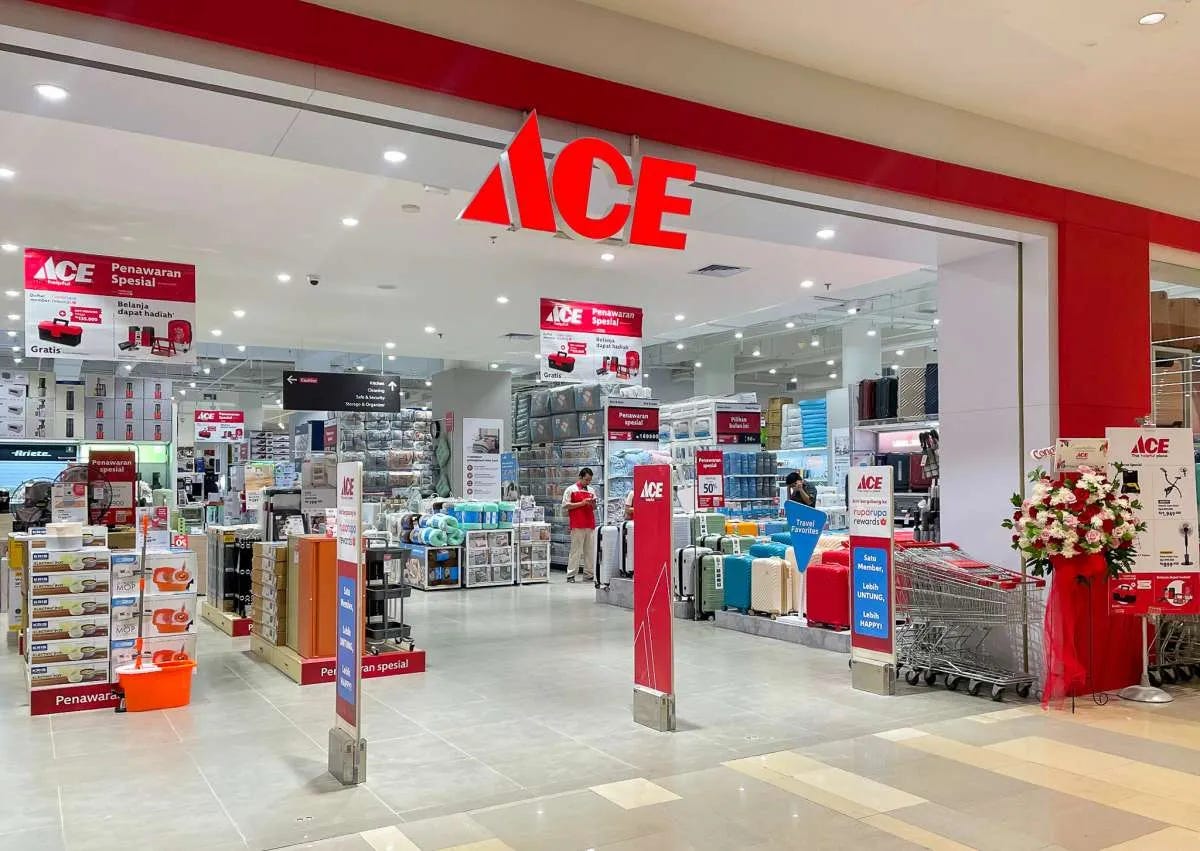
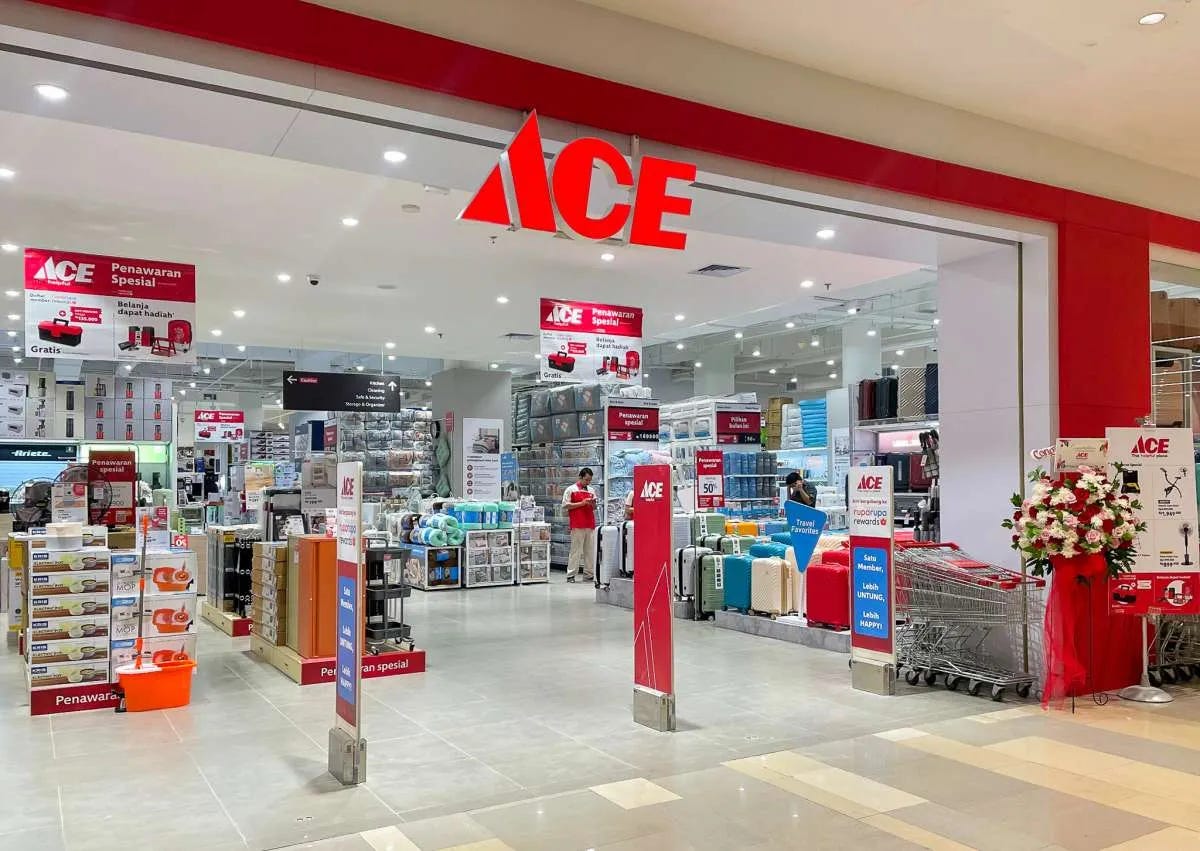
MAP revives Ace Hardware as Lion Group bets on stablecoins Two very different growth bets landed in Indonesia at once. Retail powerhouse MAP will bring Ace Hardware back to Indonesia, opening its first five to seven stores around Greater Jakarta between late July and early August after the brand’s US parent came knocking. Separately, Nasdaq-listed Lion Group Holding agreed to invest up to $12 million in PT Nusantara Bumi Sangkara, a local digital financial-infrastructure startup working on stablecoin rails. Together they capture the breadth of Indonesia’s opportunity, from home-improvement retail riding a rising middle class to next-generation payment infrastructure. When global retailers and listed investors both lean in, it speaks to the market’s pull across the old economy and the new.
Tencent Cloud powers XLSMART’s AI-driven migration Indonesia’s post-merger telco just cleared a major modernization milestone. Tencent Cloud helped XLSMART complete a large-scale cloud migration in 4.5 months, shifting 1,200 microservices, 1,100 APIs and more than 15 TB of core data with AI agents handling much of the heavy lifting. XLSMART, formed from the 2025 XL Axiata and Smartfren merger and serving over 69 million users, gains a unified digital foundation to innovate faster and run more resiliently. The project doubles as a showcase for how AI is compressing complex enterprise transformations from months into weeks. With global cloud providers expanding Jakarta capacity, Indonesia’s enterprises have ever-stronger infrastructure to build on.
🚀 What’s Next: Why AI Is Asia's New Growth Engine in S&P's Q3 Outlook
S&P Global Ratings’ Q3 2026 Asia-Pacific outlook lands on a clear dividing line: AI is now the region’s growth engine, and the economies wired into it are pulling ahead. Despite an energy-price shock from Middle East tensions, S&P sees Asia-Pacific staying relatively resilient, with tech-oriented economies outperforming on strong AI-related demand and tariff exemptions that shield key electronics exports. Just as importantly, resilient labor markets and earlier policy support are keeping domestic demand steady across the rest of the region. The headline reads cautious, but the underlying message is constructive: the AI buildout is creating real, durable winners in Asia.
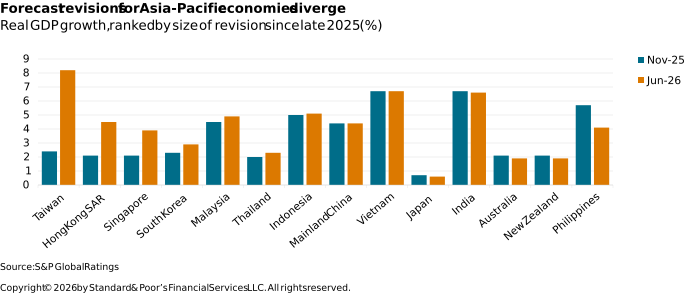
The through-line sits right in the report’s title, that AI-exposed markets are set to outperform. Tech and electronics economies are riding strong AI demand while exemptions protect their most important exports from tariffs. The main drag is energy, as higher oil and gas prices lift inflation, dent purchasing power and pressure currencies, with net energy importers feeling it most. That leaves central banks with limited room to ease, even as China’s growth softens on weak domestic demand and a long property downturn. S&P’s baseline assumes the energy shock proves temporary and conditions normalize later in the year, keeping the broader trajectory intact.
As a net energy importer, Indonesia sits on the more exposed side of the energy story, which helps explain recent inflation and rupiah pressure. But the report’s core logic doubles as Indonesia’s opportunity: the economies that win are the ones plugged into AI and electronics, and that is exactly the lane Jakarta is now racing into through data-center investment, semiconductor friend-shoring, sovereign-fund interest in chip players, fresh local bets from Microsoft and Google Cloud, and a national AI roadmap. Underpinning it all is a resilient domestic-demand engine, with growth running near 5% and Q1 2026 GDP up 5.6%, its strongest in years, alongside investment-grade BBB stability, a 20% jump in tax revenue and a deficit held below 3% of GDP. Indonesia is not yet one of the AI export champions S&P highlights, but it has both the ballast to ride out the energy shock and a clear runway to turn this AI cycle into its own growth chapter.