
This week, Indonesia’s digital economy kept its momentum despite a choppy market. Amazon-backed Astro is lining up fresh capital, Insignia Ventures is eyeing local brand URU, and NTT Data and LG CNS are doubling down on data centres in Jakarta.
On the policy front, the government is speeding up market reforms to win back MSCI, while TikTok Shop’s new standalone app offers an early look at where social commerce is heading. We also look at how Indonesia’s banks held the line against a weekend surge in cyber threats, and why that resilience is becoming a real competitive edge.

We’re excited to be the community partner of Indonesia’s first AI Company Builder, by Foundry Collective x Founder Institute. Build your startup with AI agents in 10 weeks, in Jakarta 2027. Use our link to get 30% off (save 200 USD): fi.co/apply/dailysocial
Stay sharp,
The DailySocial Team
What’s New
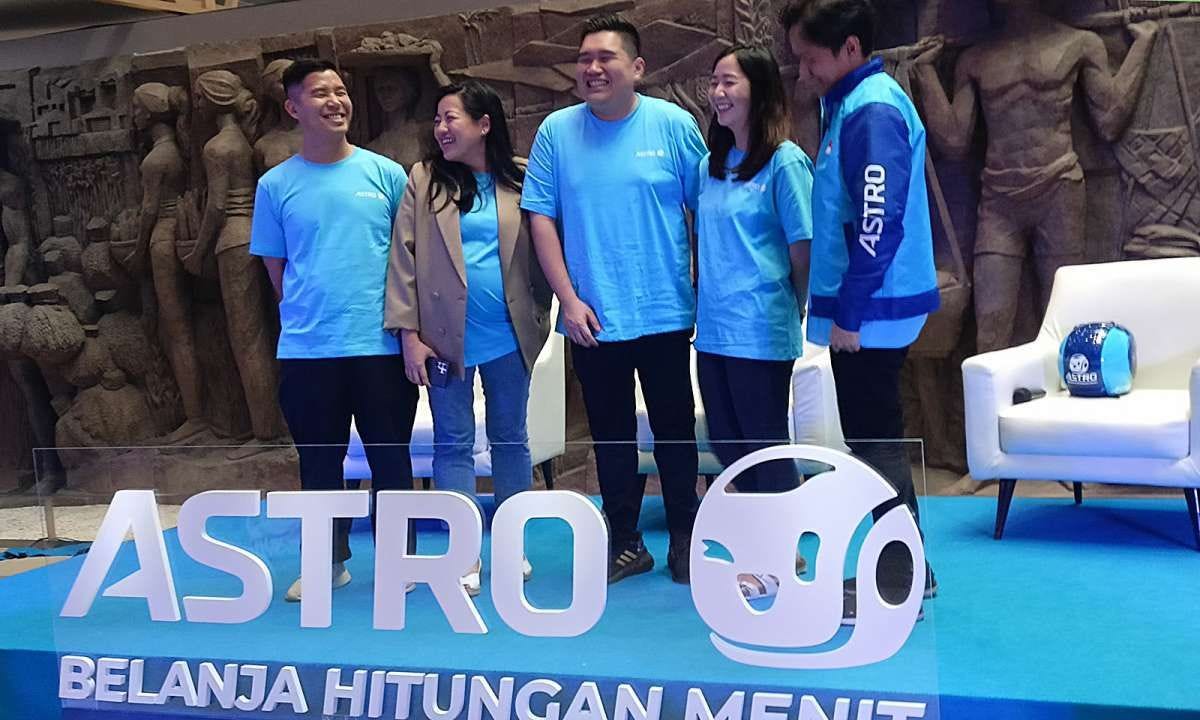
Astro Lines Up Fresh Capital for Quick Commerce
Astro, the Jakarta quick commerce startup that delivers groceries in minutes from its own small neighbourhood warehouses, is looking to raise fresh funding. Amazon led its last round, a US$51.9 million deal in September 2025, alongside existing investors. Some of Astro’s current backers are also exploring partial stake sales, which could give newcomers a way in. Repeat interest from a global giant like Amazon suggests quick commerce in Jakarta is maturing into a serious, investable category.
Insignia Eyes Underwear Brand URU
Singapore-based venture firm Insignia Ventures is in talks to invest in URU, an Indonesian brand selling seamless bras, underwear and shapewear. URU is said to be raising US$3 million to US$4 million to scale its business. The brand built its following on Indonesia’s major e-commerce platforms. Fresh backing for digitally native labels shows investors still see room for local consumer brands that win online and keep shoppers coming back.
Data Centre Builders Double Down on Jakarta
Japan’s NTT Data plans to step up data centre investment in Indonesia, adding to the US$500 million it has put in since 2015. It is opening a 12-megawatt annex in Jakarta and looking for more land over the next two to three years. Korea’s LG CNS has just finished a 30-megawatt AI data centre in Jakarta with customers already lined up, while Samsung SDS is also chasing AI data centre growth in Asia. With Indonesia’s data centre market forecast to more than double from US$2.81 billion in 2025 to US$6.08 billion by 2031, Jakarta is fast becoming a regional hub for AI infrastructure.
Jakarta Speeds Up Market Reforms to Win Back MSCI
Investment Minister Rosan Roeslani says Indonesia is accelerating reforms to address the concerns that led index provider MSCI to warn it could downgrade the market to “standalone” status. Authorities have made progress on free float, the share of stock that trades freely, and on disclosure of holdings above 1%, though enforcement still needs work. The government also plans to start selling stakes in state-owned firms next year, with airports, seaports and healthcare likely first. Danantara, which Rosan also leads, may invest more than this year’s estimated US$14 billion as it hunts for undervalued assets. Faster reforms and a privatisation pipeline give foreign investors fresh reasons to look at Indonesia again.
What’s Exciting
Flip Trims Staff to Sharpen Its Focus
Tencent-backed payments startup Flip, known for free transfers between Indonesian banks, has cut nearly 15% of its workforce, or around 70 to 80 employees. It is the company’s latest restructuring, following an earlier round of layoffs in January 2024. The move mirrors a wider shift, with fintech firms worldwide cutting thousands of jobs this year as they adopt AI and chase profitability. A leaner Flip should be better placed to protect its core payments business and reach sustainable growth.
TikTok Shop Gets Its Own App
TikTok has launched a standalone TikTok Shop app in Singapore, Malaysia, Thailand and the Philippines. Users can buy through livestreams and short videos, get app-only deals and track orders without opening the main TikTok app. Southeast Asia is TikTok Shop’s stronghold, with its regional gross merchandise value (the total value of goods sold) roughly doubling to US$45.6 billion in 2025, according to Momentum Works. Indonesia, where TikTok’s shopping runs through Tokopedia, is not part of the launch yet, so the results will be a useful preview for the country’s own social commerce scene.
What’s Interesting: Indonesia’s Banks Hold the Line Against a Cyber Surge
Indonesia’s financial sector faced a sharp spike in cyber threat activity this weekend. FortiGuard Labs, the threat intelligence unit of security firm Fortinet, detected about 350,600 threat activities aimed at Indonesia on November 7. Around 214,000 of them targeted banking, finance and insurance, with government systems a distant second at roughly 79,000. These figures count attack attempts picked up by sensors, not successful breaches, and no bank has reported lost customer funds or data so far.
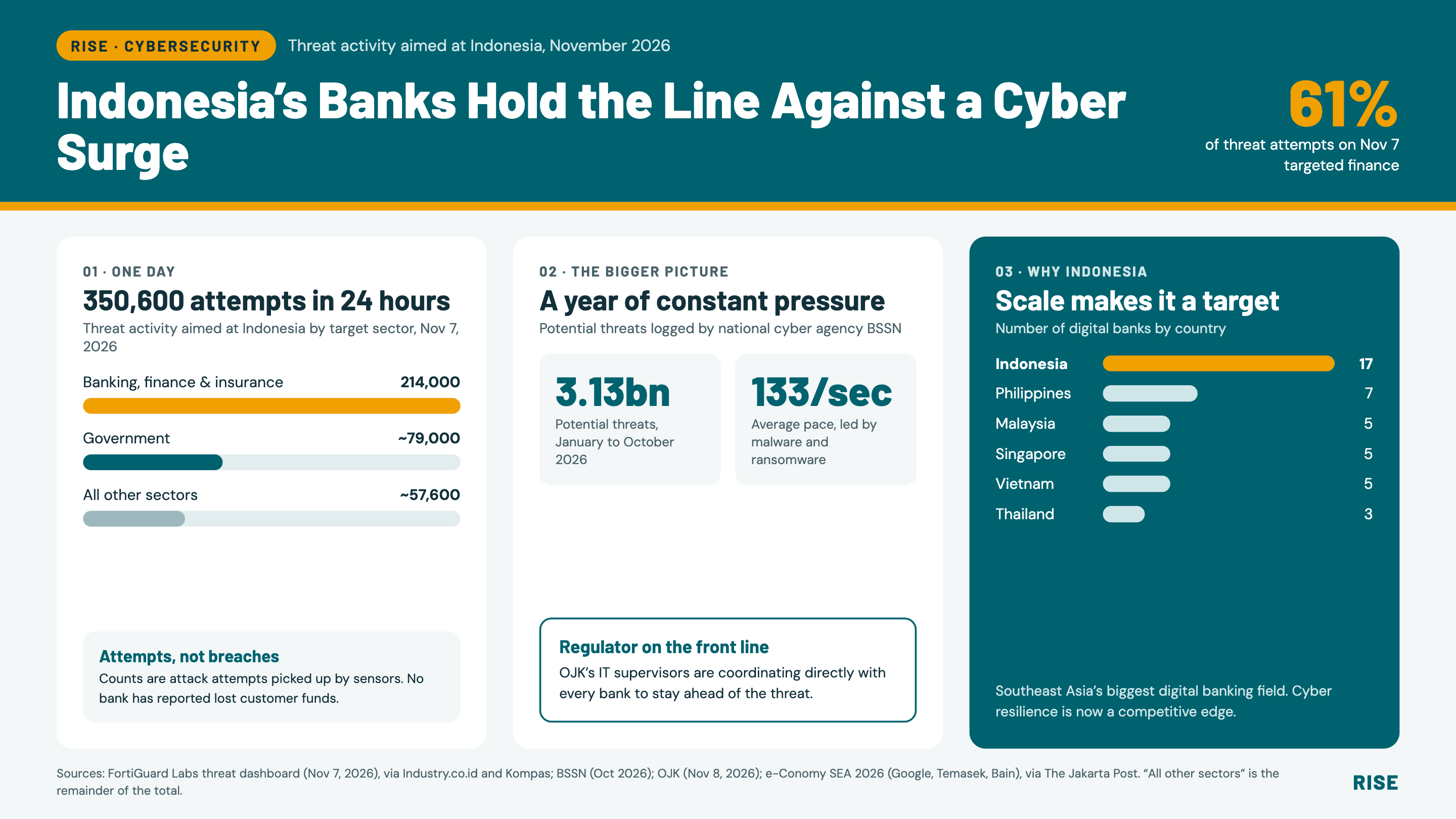
Regulators moved quickly. Financial services regulator OJK says its IT supervisors have been coordinating directly with every bank since Friday to stay ahead of the threat. The weekend surge fits a wider pattern. National cyber agency BSSN counted 3.13 billion potential threats through October, or about 133 every second, with malware and ransomware leading the list.
Being targeted is partly a sign of scale. Indonesia now has 17 digital banks, the largest field in Southeast Asia, and tens of millions of people bank and invest through their phones. Fast coordination between regulators and banks, shared threat intelligence and real-time fraud detection are turning cyber resilience into a competitive edge. They also open a growing market for local cybersecurity startups and service providers.