
Dear subscriber,
Indonesia is at another inflection point. This week: JULO doubles down, Danantara expands its waste-to-energy push, Protelindo acquires Remala, and VinFast + Bybit set up shop. On the tech front, Tencent Cloud lands J&T Express, Gemini surges across SEA, and Hengtong breaks ground in Batam, plus a fresh take on quick commerce from Momentum Works. The takeaway? Indonesia is quietly anchoring Southeast Asia’s next chapter.
AWS Summit Hadir di Jakarta
Gelaran AWS Summit akan berlangsung di The Ritz-Carlton Jakarta, Pacific Place, pada 6 Agustus mendatang. Ajang ini menghadirkan lebih dari 40 sesi terkurasi bersama para pakar, hands-on labs, serta demonstrasi langsung. Ini menjadi peluang emas bagi para founder dan profesional untuk memperluas jejaring strategis sekaligus berkolaborasi dengan pemimpin industri dan para pakar AWS yang sedang mendefinisikan ulang peta jalan cloud dan AI global. Daftarkan diri Anda segera di sini.

Thanks for reading RISE by DailySocial!
Stay ahead,
DailySocial Team
🚨 What’s New
JULO Attracts Fresh Capital as Existing Backers Double Down. Indonesian fintech JULO has closed another round of funding from existing investors including Credit Saison, Quona Capital, Saison Capital, and Skystar Capital, through a new share allotment. The company is continuing to explore a significantly larger financing round in parallel, signalling investor confidence in its next growth chapter. Repeat backing from top-tier fintech specialists is one of the strongest signals of durability in the current selective climate. For Indonesia’s digital lending ecosystem, moves like this reinforce that consumer credit fintech remains a category with real runway despite tighter regulation and macro caution.

Danantara Kicks Off Phase Two of Its National Waste-to-Energy Programme. Indonesia’s sovereign wealth fund Danantara has selected conditional winners for the second phase of its waste-to-energy programme, covering eight project clusters across 20 cities and regencies including Medan Raya, Bekasi, Lampung, Serang, Semarang, Surabaya, Bogor, and Yogyakarta. Winning consortiums include France’s SUEZ and Veolia, China’s Everbright, and four Indonesian-led groups, with 68 proposals submitted from 85 pre-qualified bidders. DIM CEO Pandu Sjahrir noted that participation from the world’s leading WtE operators shows Indonesia is increasingly trusted as an investment destination for environmental infrastructure. This is exactly the kind of long-cycle infrastructure programme that turns sovereign capital into real economic multiplier effects at the city level.
Djarum-Backed Protelindo Takes Control of Fibre ISP Remala. Protelindo, the Djarum Group’s telco infrastructure arm, has taken a direct 51% controlling stake in listed internet services provider Remala Abadi (DATA) for IDR 700.7 billion, alongside IDR 1.15 trillion in fresh loan facilities from PermataBank, Bank SMBC Indonesia, and Bank QNB Indonesia. The transaction consolidates one of Indonesia’s most active tower and fibre infrastructure roll-ups under a single group, strengthening Djarum’s position across towers, fibre, and last-mile ISP. Remala’s Nethome retail broadband brand adds a direct-to-consumer connectivity layer to Protelindo’s already massive 181,700 km fibre footprint. For Indonesia’s fibre-to-the-home race, this is a serious signal that well-capitalised operators are about to compete much more aggressively.
VinFast Kicks Off Its Real Indonesia Push with 20 E-Motorcycle Dealerships. Vietnamese EV maker VinFast has officially opened 20 e-motorcycle dealerships across Indonesia in July 2026, spanning Jakarta, Bandung, Semarang, Yogyakarta, Medan, Palembang, Makassar and other key cities. The rollout features three models, the VinFast Evo, Feliz II, and Viper, supported by a battery-swapping ecosystem and home charging solutions built with V-Green. VinFast’s move alongside Omoway’s earlier debut confirms Indonesia is now the anchor market for Asia’s next EV motorcycle wave.
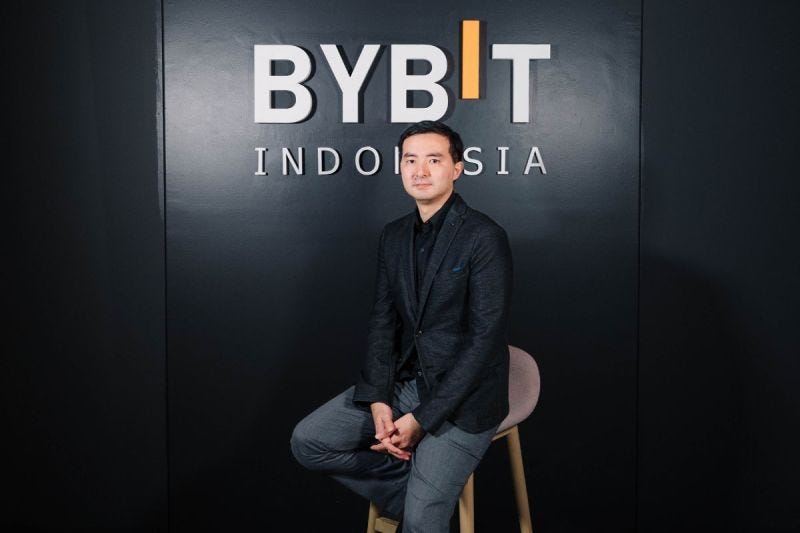
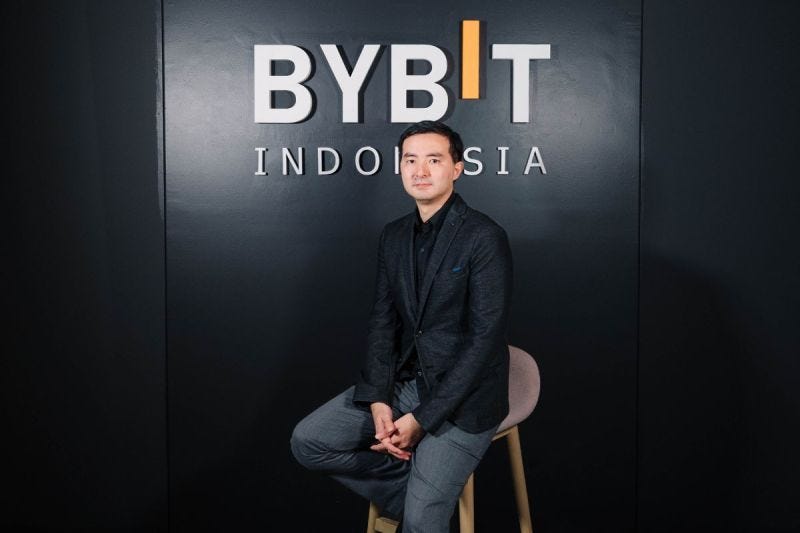
Bybit Enters Indonesia via the NOBI Acquisition. Bybit, the world’s second-largest crypto exchange by trading volume, has launched a locally regulated platform in Indonesia after acquiring a majority stake in PT Enkripsi Teknologi Handal (formerly NOBI), rebranded as Bybit Indonesia and supervised by OJK. The platform is rolling out in phases starting with 500 trading pairs, led by former NOBI executives Lawrence Samantha as CEO and Dionisius Evan as COO. Indonesia had 21.07 million registered crypto users as of February 2026 with $26.85 billion in total transaction value for 2025, making it one of Asia’s most compelling digital asset markets. Bybit’s regulated-first entry model, combining global capabilities with a licensed local structure, is the template every serious international exchange will now follow in Indonesia.

👏 What’s Exciting
Tencent Cloud Brings Its Full AI Agent Suite to Indonesia. Tencent Cloud has expanded its international AI agent portfolio to Indonesia, launching WorkBuddy for enterprise productivity, Miora for creative work, and TokenHub as a Model-as-a-Service platform at its AI Executive Day summit in Jakarta with more than 150 enterprise leaders in attendance. J&T Express was announced as the first flagship customer, deploying WorkBuddy across regional operations for workflow automation. Recent industry data shows 57% of Indonesian enterprises now name AI as their top priority for the year ahead, with 66% deepening focus on agentic AI specifically. This is enterprise AI moving beyond experimentation and into the operational core, right at the moment Indonesia’s largest companies are hungry for exactly this.
Google Gemini Doubles Its Southeast Asia User Base. Google has released its first-ever Gemini Report: Southeast Asia 2026, revealing that active users of the Gemini app in the region have more than doubled in the past 12 months, making it Google’s fastest-growing regional app. Consumer interest in AI in SEA is now three times the global average, driven by a young mobile-first population where nearly 40% are under 25. Gemini currently leads as the most searched AI assistant in Indonesia, Thailand, and Vietnam, while nearly 3 in 4 requests come from mobile devices and users are doubling their prompt count over time. For Indonesian brands, creators, and enterprises, this is real evidence that AI has become mainstream consumer infrastructure, not a niche behaviour.
Hengtong Anchors $295M Smart Logistics Park in Batam. Chinese logistics operator Hengtong is investing up to 2 billion yuan (~$295 million) in a smart logistics industrial park in the Karakang Batam Economic Special Zone on Bintan Island, with the first phase capped at around $88 million. The facility integrates a cloud computing platform and big data infrastructure to power intelligent logistics management, supporting parent Nanshan Group’s aluminium ecosystem already established on the island. Nanshan has publicly stated its ambition to build “another Nanshan Group in Indonesia,” a signal of long-term commitment few foreign industrial groups have matched. For Indonesia, this is more evidence that the country is becoming the industrial anchor of Asia’s smart manufacturing and digital-supply-chain transition.
🚀 What’s Next: Southeast Asia’s Quick Commerce Is Finally Getting the Structured Analysis It Deserves, and the Picture Is More Interesting Than the Standard Narrative.
A new report from Momentum Works on quick commerce in Southeast Asia argues that the region is charting a very different path from China and India, and that this divergence is actually a strength. China’s quick commerce was built on top of a decade of food delivery rider density. India’s version filled the gap left by thin organised retail, effectively becoming modern retail for affluent consumers. Southeast Asia is a different animal entirely: offline retail here remains dominant, fragmented, and highly localised. Quick commerce in SEA is therefore not about replacing the incumbent retail fabric but about extending it with an on-demand fulfilment layer sitting on top. Think of it as amplification, not disruption.
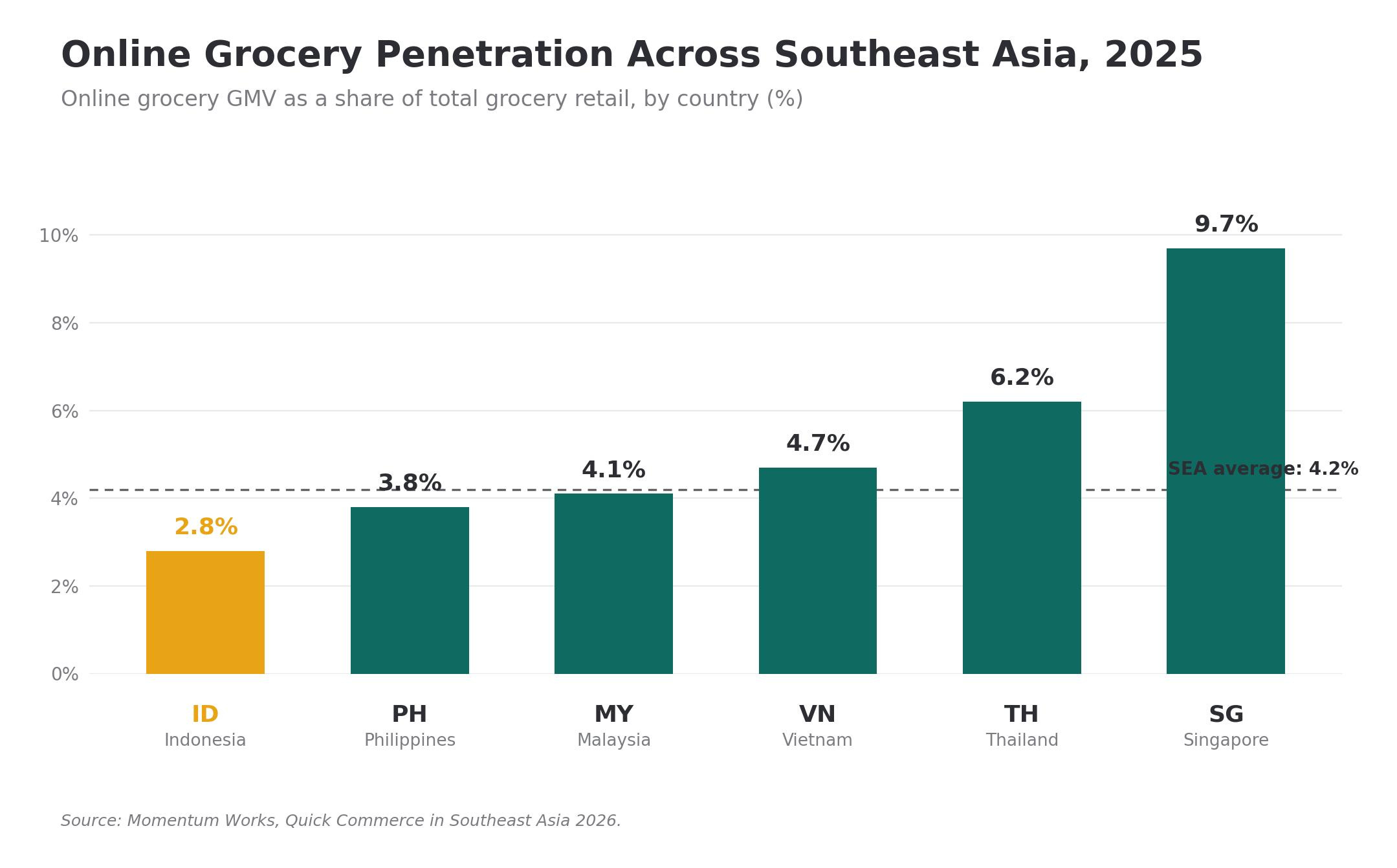
The scale is already meaningful. Southeast Asia’s quick commerce GMV reached US$7.3 billion in 2025, or about 4.6% of the region’s total ecommerce market, a strong base for a category most operators still consider nascent. Momentum Works frames the opportunity through a three-density lens: demand density (how concentrated buyers are), supply density (how close products are to buyers), and fulfilment density (how efficiently riders can serve both). Their key insight is that demand density remains the binding constraint across much of Southeast Asia, meaning the platforms and retailers who solve for consumer concentration first will define the winners over the next decade. The framework also makes clear why country-level trajectories will look sharply different, since retail structure, urban density, and consumer habits vary enormously across Indonesia, Thailand, Vietnam, the Philippines, Malaysia, and Singapore.
For Indonesia, the implications are especially interesting. As Southeast Asia’s largest consumer internet market and the anchor of regional ecommerce, Indonesia sits at the centre of the quick commerce evolution, but with a distinctly local structural profile. The retail base is dominated by warungs and neighbourhood minimarkets, a fabric that Chinese-style dark-store playbooks cannot simply overwrite. That points to a winning model here that is ecosystem-native rather than platform-only: a blend of super-apps like GoTo and Grab, marketplace giants like Shopee, warung-integration players like Warung Pintar and GudangAda, and modern retail chains like Indomaret and Alfamart already piloting on-demand fulfilment. If regional quick commerce scales as projected, Indonesia is likely to be one of the largest and most operator-diverse quick commerce markets in Southeast Asia, and one of the most instructive real-world laboratories for what “extending retail” actually looks like at scale.