
This week, Indonesia's digital economy shows both its momentum and its growing pains. Ninja Van is weighing an exit from the country, while Sociolla pushes on with regional growth and Coda brings Visa payments to gamers on Codashop. BNI is making transfers abroad faster through Wise, and Danareksa Investments is setting bold targets after a state fund merger. Komdigi is also asking Google for more clarity on its YouTube takedowns. In our deep dive, we explore the latest Digital 2027 report and why Indonesians rank among the world's most engaged digital consumers.
Stay sharp,
The DailySocial Team
Whats new
Ninja Van Weighs an Exit From Indonesia
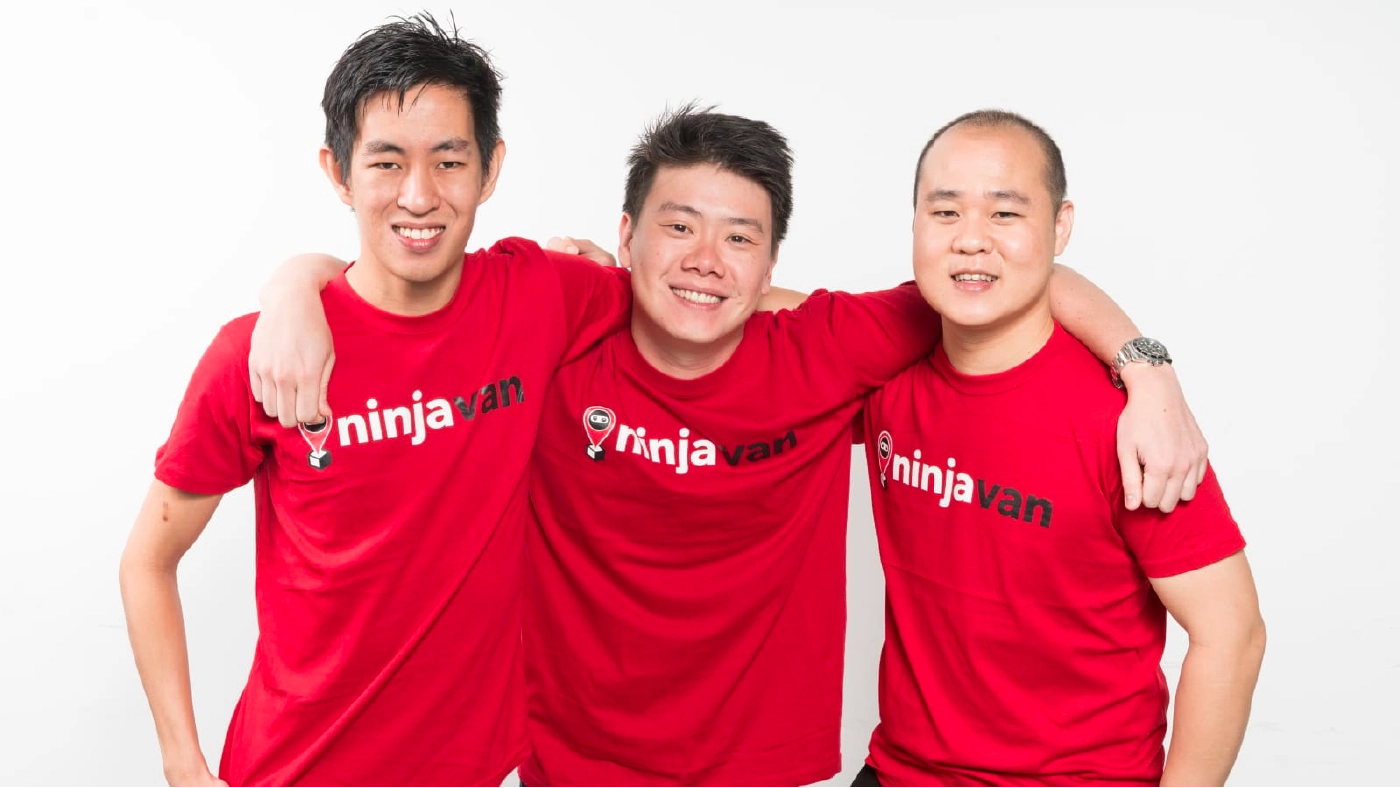
Singapore-based delivery firm Ninja Van is weighing an exit from Indonesia, where it operates as Ninja Xpress. The move would follow its shutdown of express delivery in Vietnam in September 2025, which it called a network restructuring. The company raised close to US$1 billion from backers including Alibaba, Grab and DPDgroup, and became a unicorn in 2021. Indonesia’s crowded delivery market is consolidating, and that should leave a leaner, more efficient logistics sector for online sellers.
Sociolla Grows Sales as It Looks Abroad
Beauty retailer Sociolla grew both sales and gross profit in 2025, according to its latest results. Its net loss still widened about 13 times, but the cause was a one-time accounting charge, not weaker trading. The company is also reported to have reached EBITDA profitability last year, a measure of operating earnings before interest, tax and non-cash costs, with revenue up more than 30%. With new stores in Singapore and a possible listing at home, Sociolla is testing whether Indonesian consumer brands can grow profitably across the region.
INA Backs a Regional Clean Energy Platform
Indonesia Investment Authority (INA), the country’s sovereign wealth fund, has invested in a 2.8-gigawatt solar and wind portfolio run by Singapore’s Vena Group. The projects span Indonesia and the Philippines and include the 72-megawatt Tolo wind farm in South Sulawesi. The amount was not disclosed, and Vena is backed by Global Infrastructure Partners, part of BlackRock. Pairing state capital with an experienced developer helps Indonesia add the clean power that factories and data centres increasingly demand.
Coda Brings Visa to Codashop
Coda, the digital goods company founded in Jakarta in 2011, has signed a five-year partnership with Visa. Gamers will be able to pay with Visa cards on Codashop, its store for game credits and vouchers, with a phased rollout across Coda’s main Southeast Asian markets. Southeast Asia saw nearly two billion mobile game downloads a quarter in 2025, and in-app spending rose 16% to a record US$5.3 billion. More ways to pay make it easier for game publishers to turn the region’s huge player base into paying customers.
BNI Plugs Into Wise for Faster Transfers Abroad
State-owned bank BNI has added Wise Platform, the infrastructure arm of UK money transfer firm Wise, to its wondr banking app. The tie-up lets more than 13 million customers send money to over 200 countries in more than 110 currencies. Wise says 78% of its payments arrive in under 20 seconds. BNI joins Bank Mandiri, Jenius and payments startup Flip as Wise partners in Indonesia, which means cheaper, quicker transfers for students, migrant families and small exporters.
Whats exciting
Danareksa Investments Sets Its Sights on US$11 Billion
Danantara, Indonesia’s sovereign wealth fund, has merged the fund management arms of Mandiri, BRI, BNI and PNM into Danareksa Investments, which now manages Rp172.5 trillion. The new firm is targeting Rp192 trillion to Rp200 trillion (about US$11 billion) by 2027. Danantara chief Rosan Roeslani wants it to reach Rp350 trillion within three years. It already serves more than one million retail investors and 375 institutions, and it is expanding through a Singapore arm. A bigger domestic asset manager gives Indonesia’s capital market a steadier base of local money.
Komdigi Presses Google for Clarity on YouTube Takedowns
Google’s latest influence operations report says it removed more than 19,000 Indonesia-linked YouTube channels between July and September. It described them as coordinated networks posting content supportive of the government. Komdigi, the communications and digital ministry, met Google and YouTube on November 19 and asked for a written explanation of the detection methods, accuracy and error rates. Google acknowledged that its report lacked context and said it would consult its global team. Komdigi said it backs action against information manipulation and asked platforms to apply the same tools to online gambling and pornography networks, a step toward clearer moderation rules that creators and users can trust.
Whats interesting: Indonesia, the World’s Most Engaged Digital Consumers
Indonesia now has 231 million people online, or 80.2% of the population, according to Digital 2027: Indonesia by We Are Social and Meltwater. Social media identities jumped by a third in a year to 240 million, and median mobile download speeds rose 47% in the year to August. WhatsApp is the country’s digital home. It reaches 92.7% of internet users, and active users spend an average of 1 hour 55 minutes a day on it, the longest of any country in the report. Indonesians also juggle 7.5 social platforms a month, which makes chat and social apps a natural place to sell, serve and get paid.
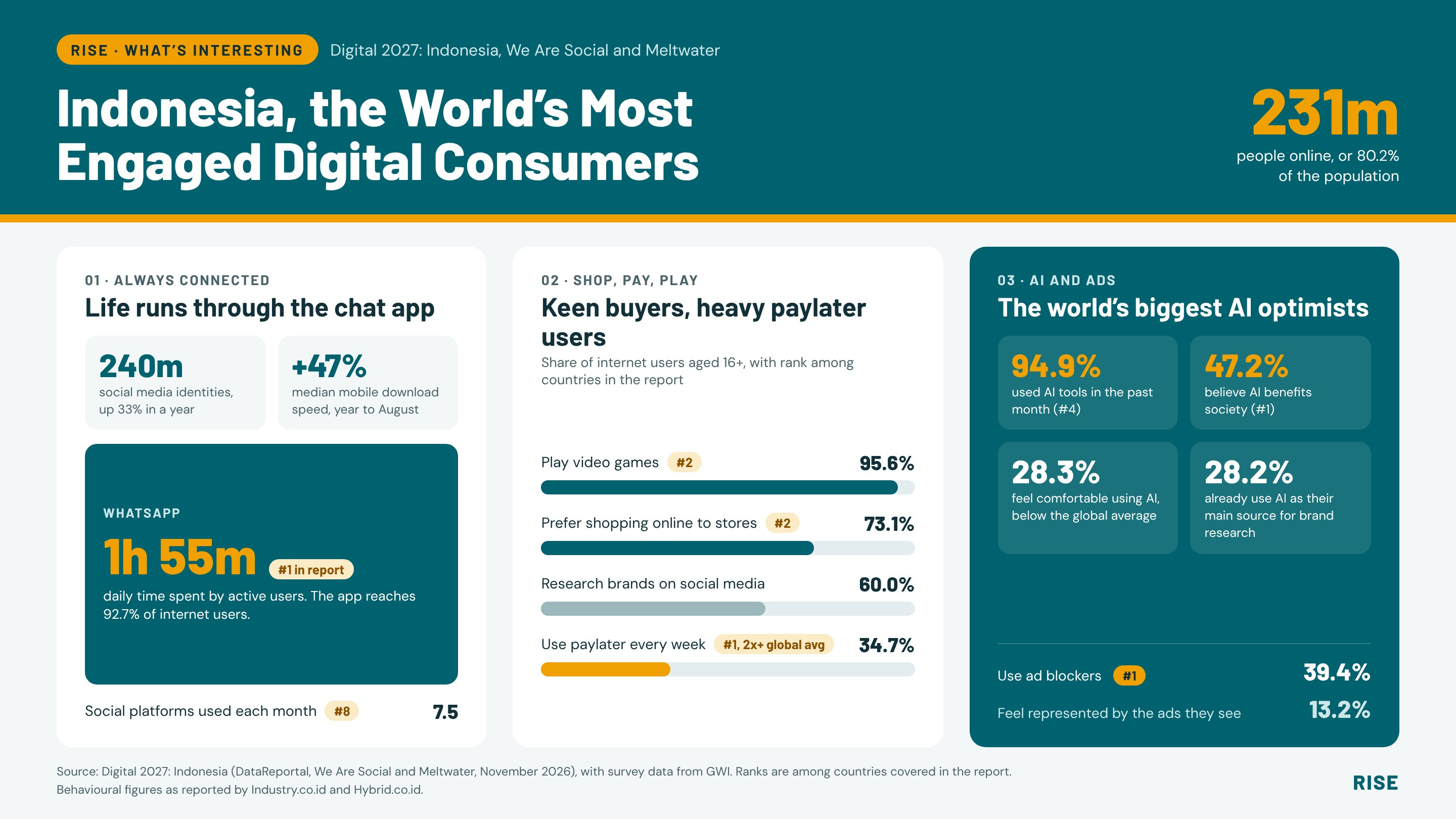
That attention is turning into spending. Some 73.1% of internet users prefer shopping online to visiting a store, the second-highest share in the report. More than two-thirds research products online before buying, and 60% turn to social networks to find brand information. Paylater has become a habit, with 34.7% using it every week, more than double the global average and the highest rate in the report. Gaming is just as mainstream: 95.6% of internet users play video games, second only to the Philippines.
AI is spreading faster than people’s confidence in using it. In the past month 94.9% of users tried AI tools, the fourth-highest rate in the report, and 47.2% believe AI benefits society, the highest optimism of any country covered. Only 28.3% feel comfortable using AI, however, below the global average, even as 28.2% already use it as their main source for brand research. Advertisers face a tougher crowd too: 39.4% use ad blockers, the highest rate in the report, and only 13.2% feel represented by the ads they see. Brands and startups that make AI simple to use and earn trust inside chat, social and paylater journeys stand to win the most engaged consumers anywhere.