
Dear subscriber,
This week’s developments reflect a business and technology landscape that is steadily regaining confidence while remaining selective and disciplined. Capital continues to flow toward companies and sectors with clear fundamentals, from consumer brands with strong omnichannel models and fintech players with proven risk management, to enterprise software firms preparing for public markets. Governments and investors alike are signaling longer-term ambition through initiatives in semiconductors. Shifts in consumer and enterprise behavior show increasing maturity, with greater emphasis on trust, value, efficiency, and sustainability.
Warm regards,
DailySocial Team
🚨What’s New
SATURDAYS Raises Fresh Capital Amid Selective Funding Climate
D2C eyewear brand SATURDAYS secured approximately US$6.3 million in new funding, standing out in a period when venture capital remains cautious. Based on regulatory filing data as quoted by DealStreetAsia, US$4 million was obtained from a new investor, Openspace Ventures, while another US$2.3 million came from an existing investor, Altara Ventures. The company has built a hybrid model that combines physical retail with strong online channels, which continues to attract investor confidence. The funding is expected to support store expansion and operational strengthening rather than aggressive experimentation.

Indonesian Government Announces Semiconductor Ecosystem Initiative With UK
Authorities announced plans to develop a semiconductor ecosystem backed by roughly US$125 million, in collaboration with partners from the United Kingdom. The initiative aims to strengthen capabilities in chip design, talent development, and advanced manufacturing. While the region has historically relied on imports, the move reflects a strategic push to participate more actively in global supply chains. It also signals long-term ambition to diversify the technology sector beyond software and services.
Atome Expands US$345 Million Credit Facility to Scale BNPL
Atome increased its syndicated credit facility to US$345 million, up significantly from the previous year, reinforcing its ambition to scale buy-now-pay-later services across Southeast Asia. The facility provides greater flexibility to fund consumer purchases and merchant partnerships amid shifting spending patterns. Despite tighter global credit conditions, the expansion suggests sustained confidence in BNPL demand and risk management capabilities. The move highlights how alternative consumer financing remains an important lever in digital commerce growth.
Consumer Behavior Matures as E-Commerce Enters “Confident Commerce” Era
E-commerce is transitioning into a phase dubbed “Confident Commerce,” where shoppers prioritize trust, product quality, and long-term value over discounts, reflecting more mature purchasing behavior. Consumers are increasingly comfortable buying higher-value items online when platforms and sellers demonstrate reliability and consistent experiences. This shift is supported by deeper engagement through creators and membership programs that reinforce loyalty and purchase confidence. As a result, the focus of digital commerce is moving from sheer volume growth to enhancing overall shopping satisfaction and meaningful impact on everyday life.
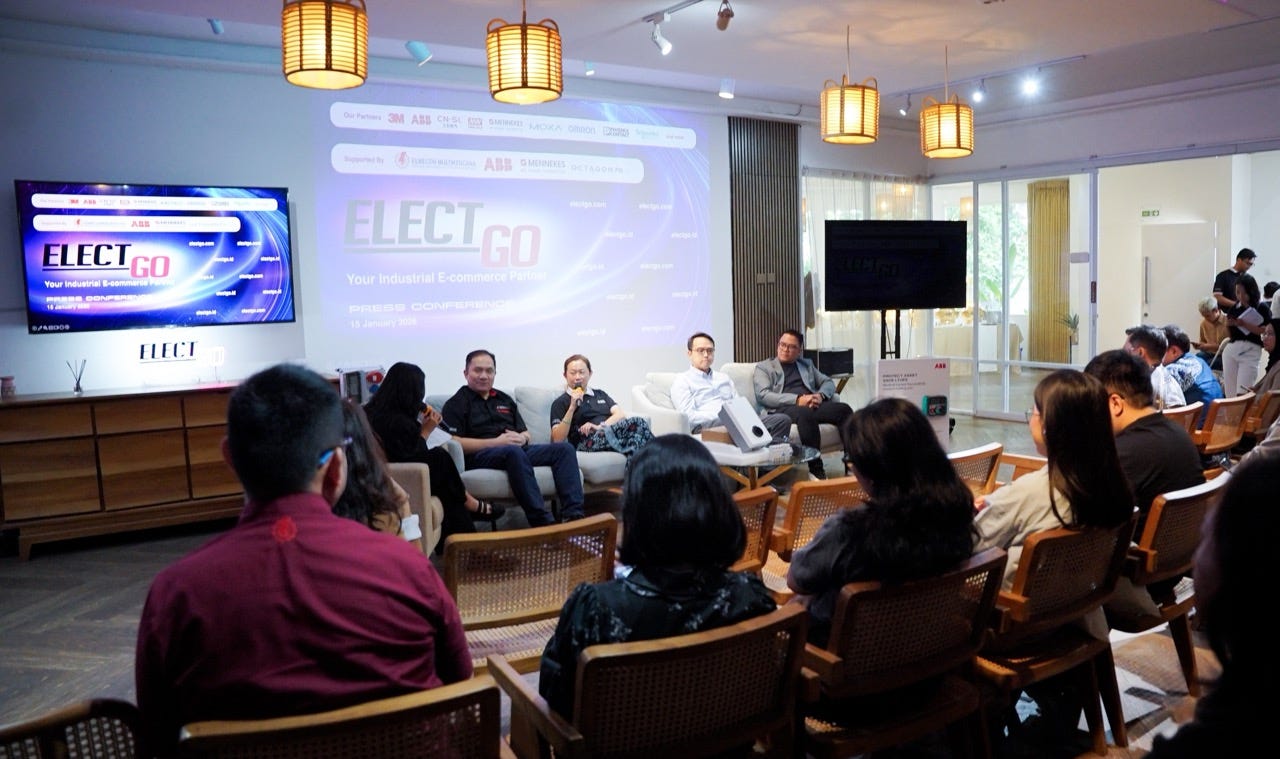
ElectGo Launches B2B Industrial E-Commerce Platform
ElectGo introduced a new industrial-focused e-commerce platform offering more than 15,000 electrical and industrial products with AI-assisted search and recommendations. The platform targets a segment that traditionally relies on offline procurement and fragmented supplier relationships. By digitizing pricing, inventory visibility, and technical support, ElectGo aims to improve efficiency and transparency in industrial sourcing. This reflects growing momentum in B2B e-commerce beyond consumer retail.
👏What’s Exciting
Affirma Capital Launches Climate Transition Fund
Affirma Capital completed the first close of its US$200 million Climate Transition Fund, focused on renewable energy, circular economy, waste and water management, and sustainable transport. The fund is backed by institutional investors and targets mid-market opportunities with both commercial and environmental impact. It is expected to begin deploying capital shortly, reflecting increasing investor interest in transition-focused assets. The strategy balances long-term sustainability goals with disciplined return expectations.
WeLab Raises US$220 Million in Series D Round
Digital financial services platform WeLab secured US$220 million in Series D funding, signaling renewed investor confidence in established fintech players. The round highlights a shift in capital toward companies with clearer paths to profitability and strong risk controls. Despite a cautious funding environment, large late-stage rounds continue to materialize for platforms with scale and stable revenue. The deal suggests sustained demand for digital banking and embedded finance solutions.
Toku Files for IPO, Targets January Listing
Customer experience software provider Toku has filed registration documents for an initial public offering, targeting a January market debut. The move reflects growing confidence in enterprise software companies with recurring revenue models and regional customer bases. Its planned listing adds to a limited but important pipeline of technology exits in the region. The IPO could serve as a benchmark for valuations and investor appetite in the software sector.
🚀 What’s Next: Indonesia Business Sentiment Shows Cautious Optimism Amid Structural Challenges
The Kadin Indonesia Business Pulse Q4-2025 (Pilot Edition) was launched to provide a faster, business-oriented complement to official macroeconomic data by capturing real-time sentiment from Indonesian enterprises. Conducted between 1–23 December 2025, the survey collected responses from 155 KADIN members across sectors and firm sizes, ranging from micro enterprises to large corporations. Its objective is to serve as a regular monitoring tool to inform government policy and private-sector strategy by assessing current business conditions, sectoral performance, investment plans, and outlook for 2026
Is your company’s current business condition better compared to the previous quarter?
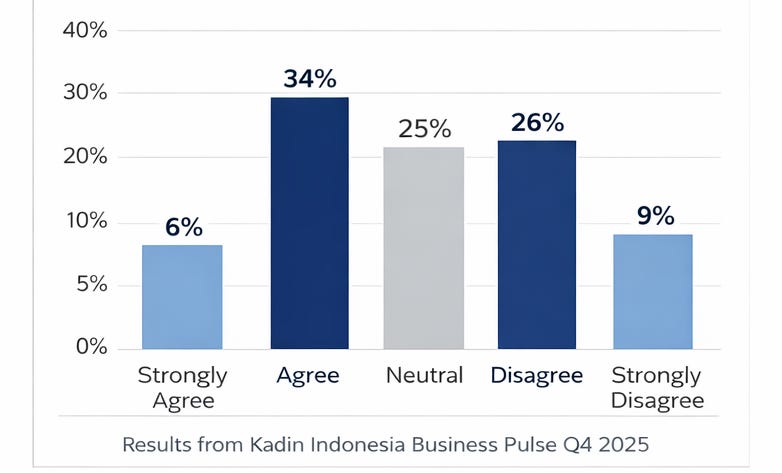
Overall findings indicate a cautiously positive business sentiment. Around 40% of respondents reported positive conditions, exceeding negative sentiment (35%), though a substantial neutral segment reflects ongoing uncertainty. Many businesses perceived improvements in current business and sector conditions compared with the previous quarter, but recovery remains uneven across industries. Nearly half of respondents expressed plans to invest within the next six months, signaling emerging optimism, albeit tempered by macroeconomic uncertainty. The most significant positive drivers identified were market development, improved competition, and better regulatory conditions.
Despite this optimism, structural challenges remain prominent. Bureaucracy and regulation were cited as the primary obstacles, followed by limited access to financing and weak or volatile market demand. Looking ahead to 2026, confidence is largely anchored in expectations of central government policy support, complemented by hopes for appropriate fiscal incentives and stronger legal certainty. The report concludes that while current policies are broadly aligned with business aspirations, particularly in financing, sustaining positive sentiment will require stronger demand stimulation, regulatory simplification, and improvements in labor market conditions, with the financial services sector showing the strongest overall confidence.